
When it comes to men’s grooming, few topics cause as much quiet confusion (and frustration) as hairlines.
One day the hairline looks the same as it always has; the next, it looks slightly higher… or uneven… or suddenly “different.”
But here’s the truth:
Not every shifting hairline is a receding one. Some are simply maturing, some are naturally high, and some just need the right haircut to look balanced.
Understanding the science behind men’s hairlines can help men choose better haircuts and help stylists deliver cuts that enhance confidence instead of highlighting concerns.
Let’s break it down.
Not All Hairlines Are the Same and That’s Normal
Every man has a natural hairline shape. The most common include:
- Straight hairline
- M-shaped hairline (naturally defined corners)
- Rounded/U-shaped hairline
- High hairline
- Cowlick-influenced uneven hairline
The mistake many men make is assuming that any shape other than a straight, low hairline signals hair loss.
It doesn’t.
A hairline is just anatomy, which is a combination of genetics, follicle direction, and density. What matters is understanding what’s normal for you.
Maturing Hairline vs Receding Hairline: What’s the Difference?
Most men experience a maturing hairline between ages 18–29.
This is not balding, it is simply the forehead gaining 1–1.5 cm of vertical space, creating a more adult-looking frame.
A maturing hairline usually:
- shifts evenly
- maintains density
- keeps a soft M or U shape
- stabilises after a point
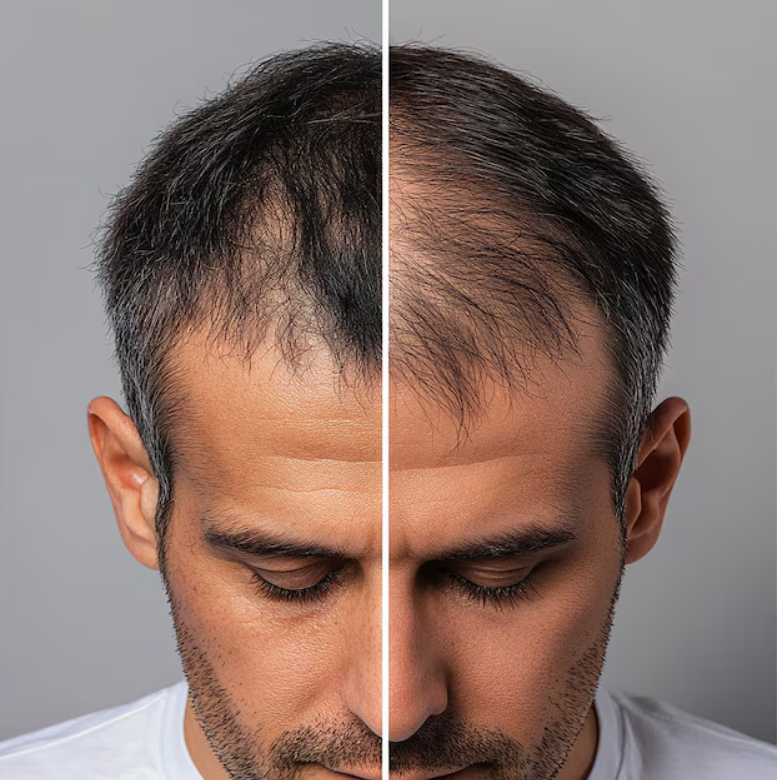
A receding hairline, however, behaves differently.
Signs it may be receding:
- corners moving significantly higher
- density visibly thinning across the temples
- the “M” becoming deeper and sharper
- changes occurring asymmetrically
Understanding the difference matters because the haircut approach changes entirely depending on the pattern.
The Right Haircut Depends on the Hairline, Not Just the Face Shape
A skilled stylist doesn’t look only at the jawline or cheekbones.
They study the hairline architecture: how high it sits, where it recedes, how the corners behave, and how the density shifts.
This is where professional training makes a difference.
At Bodycraft Academy, students learn to:
- analyse fronto-temporal recession
- map density across the crown and temples
- design cuts that visually balance the hairline
- choose between fades, tapers, and length building
- use texture to soften deep corners
- avoid shapes that emphasise gaps
Here’s how professionals adapt cuts for different hairline types:
Haircuts for a Mature Hairline
A maturing (not receding) hairline can look incredibly sharp with the right cut.
Best choices:
- Textured crop – brings focus to texture, not the hairline
- Crew cut with soft corners – maintains structure without harshness
- Medium-length quiff – adds height and creates balance
- Side-part taper – gives a clean but adult look
What to Avoid:
Straight, hard hairlines or razor-sharp edges (they accentuate the shift)
What Pros Do:
Stylists use soft tapering around the temples to blend the natural recession into the cut.
Haircuts for a Receding Hairline
A receding hairline needs the right shape strategy, not camouflage. The stigma around receding hairlines can be enough to bring a person’s confidence down, the following can be some ways you could turn the tables around a seemingly unsalvagable situation:
- Buzz cut: This is ideal for advanced recession; it is balanced and masculine and can barely go wrong.
- High fade with textured top: Pulls attention upward, ideal for a patchy side receding hairline.
- Modern Caesar: The forward fringe disguises temple recession subtly.
- Longer top with messy movement – creates visual coverage without looking intentional.
What to Avoid:
– Middle parts (highlight asymmetry)
– Slick backs on thin hair (exposes scalp)
What Pros Do:
Professionals are trained to study every client’s hairline and then they decide to use visual density techniques like uneven texturising, crown elevation, and controlled volume to make the top appear fuller.
We, at Bodycraft Academy, help determine and tackle these issues through theoretical as well as practical applications, whether you have been in the industry long enough or you’re a complete newbie.
Haircuts for Uneven Hairlines or Cowlicks
Cowlicks and uneven corners are not flaws, they simlyneed smarter design.
Best choices:
– Textured messy looks: harness the natural direction
– Side-swept fringe: balances asymmetry
– Layered top with soft taper: smoothens irregular lines
What to Avoid:
– Trying to straighten a cowlick unnaturally
– Blunt edges
Pro technique:
– Stylists cut with the growth pattern rather than against it.
– This ensures the style stays intact even as the hair grows out.
The One Universal Rule: Your Hairline Shouldn’t Dictate Your Confidence
A shifting hairline doesn’t signal loss of youth, it signals a need for a haircut that complements your current architecture.|
With the right cut:
- receding hairlines can look intentional
- mature hairlines can look bold
- uneven hairlines can look stylish
- thinning hair can look structured
This is why consultation training is essential for aspiring stylists.
Men rarely verbalise hairline insecurities it’s up to the professional to recognise patterns and recommend the right direction.
At Bodycraft Academy, students are trained to do exactly this through modules on:
- face & hairline mapping
- density & texture study
- tapering science
- advanced short-hair cutting
- personalised men’s grooming systems
- It’s not just haircutting.
- It’s transformation through understanding.
When Should Men Seek Professional Help for Hairline Changes?
Not every shift is a medical concern, but men should consult a specialist if:
- hairline changes happen rapidly
- thinning occurs across the crown and temples
- scalp visibility increases noticeably
- shedding persists beyond 3–4 months
Stylists are not doctors but they’re often the first to notice early signs.
Understanding this science helps professionals guide clients gently and responsibly.
Hairlines Are Personal And So Should Be the Cut
There is no “ideal” hairline.
There is only the hairline you have and the haircut that suits it best.
For men, knowing the difference between a maturing and receding hairline can eliminate unnecessary worry.
For aspiring stylists, mastering hairline analysis is a career-defining skill, which anybody can hone at the Bodycraft Academy.
We believe that when technique is mastered, even the most challenging hairline becomes an opportunity to create balance, structure and confidence.
Join the Bodycraft Academy’s Professional Hair Dressing Course to get hands-on experience and kickstart a career in the industry from scratch.
FAQ
No. A receding hairline is a natural part of the ageing process and most men will have some kind of receding hairline by their late 20s. It is a small and fairly even shift in the hairline, and it does not represent thinning or follicle damage. Hair fall, in contrast, has been seen to demonstrate perceptible low density and can also develop over a period of time.
Yes. The good news, however, is that a receding hairline can look better with the right haircut. Professional stylists balance and add visual density while adding length strategically, utilizing texture and tapering in the hairline so that it doesn’t look too deliberate nor obvious.
Some haircuts unintentionally draw attention to areas where hair is already thinning. Styles that pull hair straight back, create sharp centre parts, or leave the sides too tight can expose the scalp and make the hairline feel more obvious. This usually isn’t the client’s fault — it happens when the haircut isn’t adapted to the hairline’s natural pattern. A trained stylist knows how to adjust length, texture, and balance so the cut works with the hairline, not against it.
Not at all. Longer hair can actually work very well for some men, as long as it’s cut with intention. When longer styles are layered and given natural movement, they help soften the hairline instead of highlighting it. Problems usually arise when long hair is worn flat or overly controlled. The key is understanding how to build shape and texture — something a professional stylist can guide you through.
No, they’re simply part of how hair grows. Cowlicks and uneven hairlines are extremely common and don’t mean there’s anything “wrong” with your hair. They only become frustrating when cuts try to fight against them. When stylists follow the natural growth pattern instead of forcing symmetry, the result usually looks more relaxed and holds its shape better over time.
A good stylist looks beyond trends and photos. They observe where the hairline sits, how dense the hair is, how it grows, and how much time the client wants to spend styling it daily. At Bodycraft Academy, students are trained to read these details during consultation, so the haircut feels personalised rather than generic.
Small changes over time are normal. However, it’s worth paying attention if the hairline shifts very quickly, if thinning appears at both the temples and crown, or if shedding feels excessive for several months in a row. While stylists don’t diagnose hair loss, they are often the first to notice patterns and can suggest when it might be helpful to seek further advice.
Yes, it can. Understanding basic haircutting principles helps men make better grooming choices, communicate more clearly with their stylist, and even maintain their own hair more confidently. Many people join professional hairdressing courses at Bodycraft Academy simply to learn the foundations and later decide whether they want to take it further as a career.