
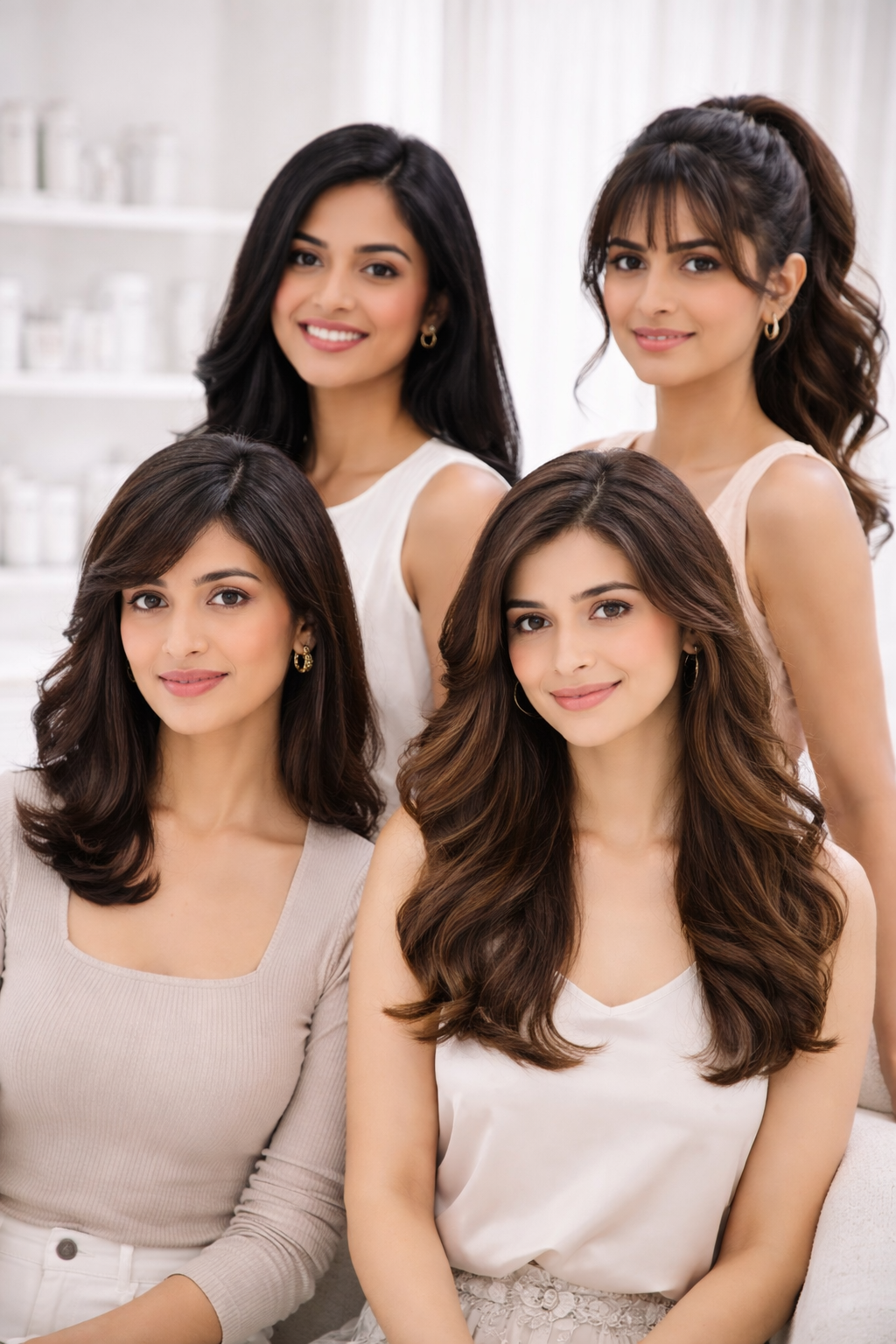
Pinterest boards are full. Instagram is bookmarked and you’re ready for a new haircut.
But before you say “just like this picture,” take a pause.
Because the best haircut isn’t the trendiest one. It’s the one that works with your face shape, your texture, and your lifestyle.
Understanding this is what separates a random haircut from a transformational one.
Here’s how to choose the right haircut for your face shape, step by step.
Step 1: Identify Your Face Shape
Start simple.
Pull your hair back and look at:
- The width of your forehead
- The width of your cheekbones
- The shape of your jawline
- The overall length of your face
Most women fall into one of these shapes:
- Oval
- Round
- Square
- Heart
- Long / Rectangular
Face shape analysis is one of the first things trained hairstylists learn. At Bodycraft Academy, facial structure mapping is foundational in the Hair Dressing program because cutting without analysis leads to inconsistent results.
You can explore the Hair Dressing course here:
https://bodycraftacademy.com/professional-courses/hair-dressing/
Step 2: Choose a Cut That Creates Balance
Haircuts are about visual balance. Every face shape benefits from either softening, adding length, or creating width.
Oval Face Shape
Balanced proportions. Most styles work — long layers, bobs, curtain bangs, soft waves. Precision still matters, especially based on density and movement.
Round Face Shape
Softer jawline, equal width and length.
Best options add vertical length — long layers, side parts, textured lobs, volume at the crown.
Square Face Shape
Defined jawline and strong angles.
Soft layers, side-swept fringes, and movement help soften structure.
Heart Face Shape
Wider forehead, narrower chin.
Chin-length bobs and layers below the cheekbones help create balance.
Long or Rectangular Face Shape
Longer than wide.
Blunt cuts, waves, shoulder-length styles and fuller fringes help reduce vertical length.
This is where technique becomes everything. The same “lob” can look completely different depending on how it is structured.
Step 3: Factor in Texture and Density
Face shape alone is not enough.
Straight, wavy, curly and coily hair all behave differently. Density changes how volume sits. Growth patterns influence fall and movement.
Professional haircutting is based on:
- Elevation angles
- Weight distribution
- Graduation
- Layer placement
This structural understanding is why formal training matters. In comprehensive beauty education programs like Cosmetology, students learn not just haircutting but how hair interacts with skin tone, makeup balance and overall aesthetic harmony.
If you’re curious about broader beauty education pathways, you can explore them here:
https://bodycraftacademy.com/professional-courses/cosmetology/
Step 4: Think About Real Life, Not Just the Mirror Selfie
Be honest about your routine.
Do you heat-style daily?
Are you a wash-and-go person?
Do you work long hours?
A great haircut fits your lifestyle. It should grow out well, require manageable styling, and still look intentional.
Consultation skills are just as important as cutting skills. At Bodycraft Academy, students are trained not just in technique but in asking the right questions before making recommendations.
Step 5: Don’t Copy. Customise.
The biggest haircut mistake? Copying inspiration photos without adapting them.
A trained stylist reads:
- Bone structure
- Hair behaviour
- Symmetry
- Personal style
This turns a trend into a tailored result.
And if you’re someone exploring a career in hair or beauty, understanding this difference is what moves you from enthusiast to professional.
You can explore all professional courses offered at Bodycraft Academy here:
https://bodycraftacademy.com/professional-courses/
Final Thoughts
Trends change every season but face shape does not.
When you understand proportion and structure, you stop chasing styles and start choosing intelligently.
And that shift — from guessing to knowing — is what defines a confident client and a confident professional.
FAQs
1. Can I change my face shape with a haircut?
You cannot change your face shape, but you can create the illusion of balance and proportion with the right cut.
2. Is face shape the only factor in choosing a haircut?
No. Hair texture, density, growth patterns, and lifestyle are equally important.
3. Are trendy haircuts suitable for everyone?
Not always. Trends must be adapted based on individual structure and practicality.
4. How do professionals determine face shape?
Through visual assessment of proportions, jawline structure, forehead width, and cheekbone placement.
5. Is professional training necessary to master haircutting?
Yes. Structured education ensures you understand technique, geometry, and consultation, which are essential for delivering consistent results.