
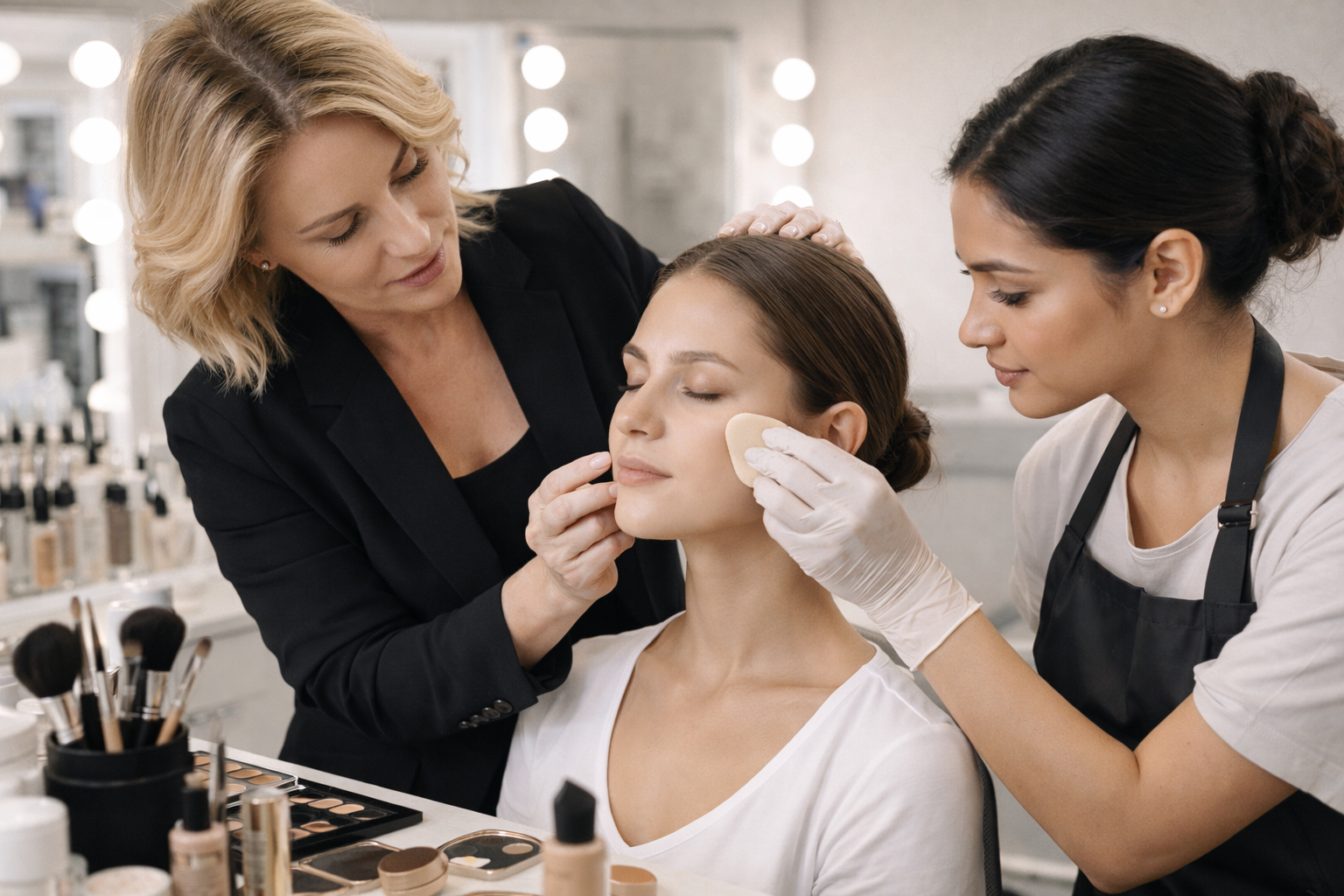
There’s something quietly magical about doing your own makeup well. But makeup beginners face the same small errors over and over that make a good product look patchy, a great base look cakey, or a neat eye look turn messy. The good news? Most of these are easy to fix with a little technique, a tiny course-correction, and the right habits.
Below are the five most common makeup mistakes beginners make and the exact, practical ways to avoid each one.
1. Skipping skin prep (and expecting makeup to do the work)
Why it matters
Makeup sits on skin. If the skin’s dry, textured, or uneven, products will cling, flake, or slide. Modern beauty moves toward “skin-first” makeup, a process that enhances skin health rather than masking it — so prep has become non-negotiable.
How to avoid it, a practical fix:
- Cleanse first: Start with a gentle cleanser to remove oil and dirt.
- Hydrate smartly: Use a lightweight hydrating serum or gel-based moisturiser for oily-prone skin, and a richer cream for dry skin.
- Prime where needed: Choose a makeup primer for your concerns (mattifying for oily zones, smoothing for texture, hydrating for dry skin).
- Give products time: Apply serums and creams, wait 60–90 seconds, then prime — rushed layering often causes patchiness.
Quick pro tip: Treat your base like a canvas. The better the skin prep, the less product you’ll need to use to get a polished result.
Learn more in this: Refer This
2. Picking the wrong foundation or shade
Why it matters
Shade mismatches and formula mismatches are still one of the most visible beginner errors — foundations that look too dark, too orange, or sit heavily on the skin are instantly ageing or unflattering. Brands and pros now stress testing shades in natural light and along the jawline to find the true match.
How to avoid it, a practical fix:
- Test along the jawline in daylight (avoid the test on wrist)
- Think skin-type first: Dewy formulas for dry skin, more mattifying/long-wear formulas for oily skin.
- Try samples or travel sizes when possible: The same shade in two formulas can behave very differently on your skin.
- For online purchases: Match to your current trusted shade and read user photos for undertone clues.
Quick pro tip: If your foundation looks “off” in photos, it may be the undertone. Warm vs cool undertones matter more than depth alone.
3. Not blending (or blending the wrong way)
Why it matters
Makeup sits in pockets and edges when it isn’t blended properly. The age-old advice — “blend, blend, blend” — remains the most useful. But how you blend matters: tamping/tapping can meld product; aggressive rubbing moves product around and increases streaks. Pro artists emphasise pressing and stippling over dragging.
How to avoid it, a practical fix:
- Use the right tool: Dense, slightly damp sponges for liquid products; soft buffing brushes for cream-to-powder transitions.
- Tap, don’t drag: Pressing motions help the product “melt” into skin instead of sitting on top.
- Blend in layers: Build coverage in thin layers rather than one heavy application.
- Check edges and hairline: Always feather product at the jaw and hairline to avoid visible lines.
Quick pro tip: Blend in natural light if possible, so you can see how the product truly sits.
Learn more in this: Refer This
4. Overdoing brows, liner or lashes too early
Why it matters
Beginners often zero in on dramatic features — brutal brows, thick liner wings, or heavy lashes — without building the base. Overdone brows or harsh winged liner can age a look or make the rest of your makeup appear mismatched. Current pro trends favour natural, well-placed brows and softer eye definition (think diffused liners, blurred lashes).
How to avoid it, a practical fix:
- Start light: Map brows with soft strokes and build density gradually. Use a spoolie to soften.
- Practice liner technique: Learn short strokes and small wings before committing to one long line. Use tape or a card for consistent angles if needed.
- Layer lash options: Mascara first, then add a single strip of falsies if desired — avoid stacking heavy falsies with full mascara clumps.
- Balance the face: If you go bold on brows, soften the lips and cheek application to match.
Quick pro tip: The right brow product depends on hair density — pencils for sparse hair, powders for fuller brows.
Learn more in this: Refer this
5. Product overload & poor product pairing
Why it matters
More product is not better. Using multiple heavy products together (thick moisturisers + heavy primer + full-coverage foundation + thick powder) leads to cakey, heavy looks and can emphasise texture. Contemporary makeup leans into fewer, better-chosen products that complement each other.
How to avoid it, a practical fix:
- Edit your kit: Keep multipurpose products (tints, sticks, versatile palettes) to reduce layering.
- Match finishes: Pair dewy formulas with satin or cream products; avoid loading matte powders over dewy creams.
- Use minimal powder: Set where necessary — under-eye and T-zone — rather than pressing powder all over.
- Learn product order: Liquids/creams → color corrections → foundation → concealer → powder → cream blush/bronzer (if using creams, apply before powder).
Quick pro tip: less product plus better blending almost always beats more product and poor technique.
Learn more in this : Refer this
Modern additions: trends beginners should know (but not blindly chase)
- Skin-first makeup: luminous, hydrating bases and skincare-infused makeup are now mainstream — this means prep and product choice are more important than ever.
- “No-makeup makeup” and blurred, soft edges are popular — focus on soft definition, not heavy coverage.
- Ingredient awareness: consumers want clean, effective formulations; beginners should get comfortable reading labels for sensitives and performance claims.
Quick checklist: five things to do before you start makeup
- Cleanse + hydrate appropriately for your skin type.
- Match foundation shade on the jawline; test in natural light.
- Use small amounts and build coverage in thin layers.
- Blend with pressing/tapping motions, not dragging.
- Edit your kit — fewer multipurpose, quality products are better than many mismatched ones.
Learn more in this : Refer this
Where beginners can get the right technique
If you’re serious about learning the craft and not just quick fixes, a structured training helps. At Bodycraft Academy we teach the fundamentals: skin prep, product choice, correct tools, and step-by-step application techniques used by professionals. Our focus is hands-on practice, so students graduate confident in both skill and judgement and can also get a placement right after the course is completed.
If you want to learn properly (and quickly), we run beginner-friendly modules that cover base work, eyes, brows, corrective techniques and how to advise clients — all built with real-world salon and bridal demands in mind.
Final thoughts
Makeup should be fun, expressive, and confidence-building. Most common beginner mistakes are fixable with better prep, smarter product picks, and a few simple technique changes. If you want structured help — not just tips — consider learning in a hands-on environment where experts can correct small habits early. That’s the fastest route from “trying” to “doing it expertly.”
For those who want structured, professional makeup education, explore the Professional Makeup Artist courses here. 👉https://bodycraftacademy.com/professional-courses/make-up/
A: Depends on how often you practise. With focused practice (and a few guided sessions), most people see real improvement in a few weeks. Regular feedback — from a friend, mentor or a short course — speeds up progress.
A: Not at all. Good technique trumps price. Smart product buys — a good primer, a stable foundation for your skin type, and a multitask stick — will give you far more value than dozens of trendy items.
A: A damp sponge or beauty blender, a dense foundation brush (or sponge alternative), a soft buffing brush for powders, a small blending brush for eyes, and a spoolie for brows are the core tools to start.
A: Yes. Learning correct technique reduces product waste, prevents costly mistakes (like wrong shade buys), and gives you the confidence to select products that truly work — saving you time and money.
A: Patch test for sensitivities, read ingredient focuses (look for hydrating humectants for dry skin; oil-control ingredients for oily types), and try samples where possible. When in doubt, go minimal and build.